
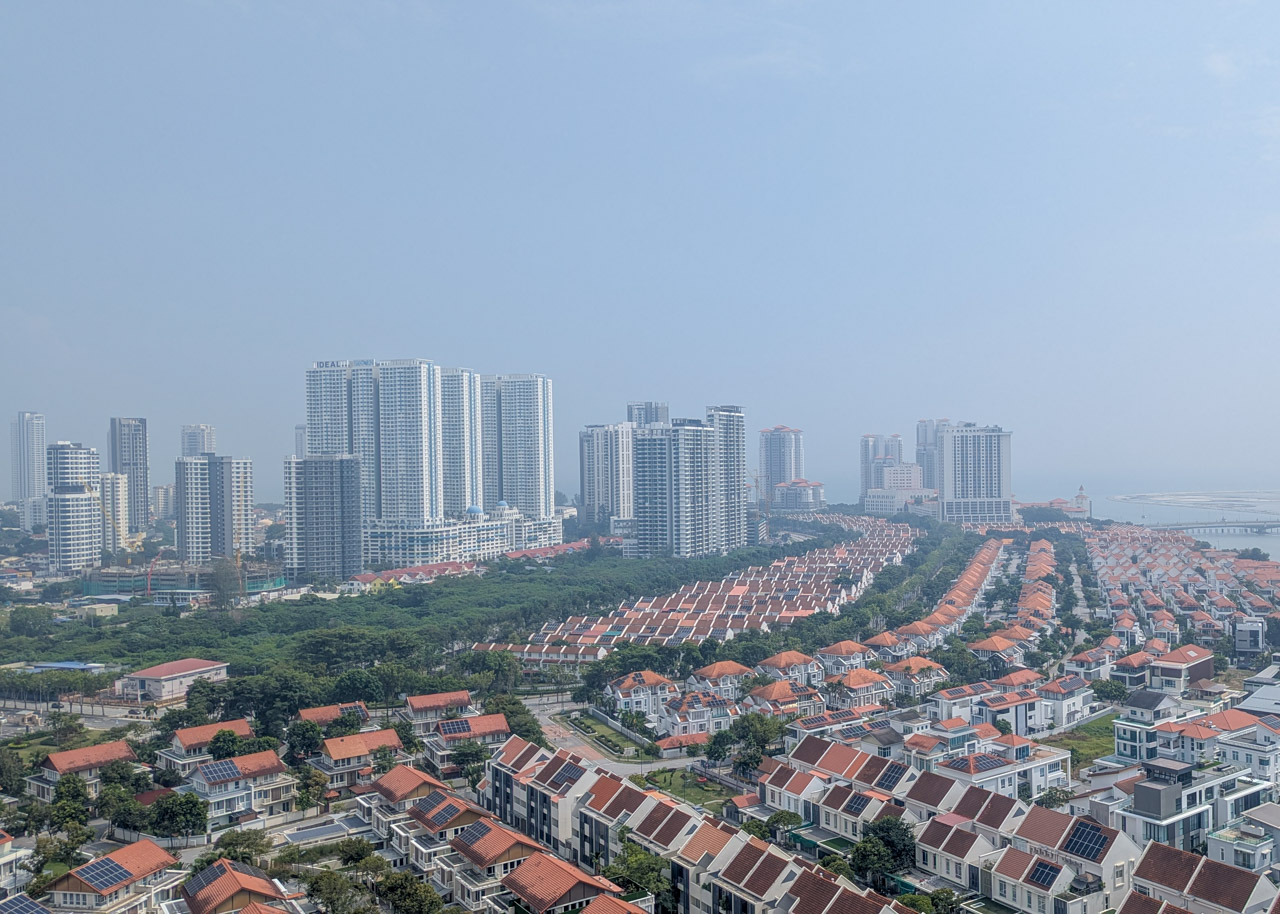
Haze is an occasional part of life in Penang, particularly during August and September. When conditions are bad, the island can go from clear blue skies to a grey, smoky-looking landscape, with poor air quality affecting everything from hiking and cycling to relaxing pool days.
The good news is that haze doesn’t happen every year, and conditions can change quickly. Rain can bring noticeable relief, while changing wind conditions can also help clear the air.
If you’re visiting Penang during August or September, it’s worth checking the air quality as well as the weather forecast before planning outdoor activities.
What causes haze in Penang?
Much of the haze affecting Malaysia is linked to fires in Indonesia, particularly during prolonged dry periods. Fires in forests and peatlands can produce large amounts of smoke and fine particulate pollution, which can travel across national borders.
Sumatra and Kalimantan are important sources of smoke affecting the region. How much haze reaches Penang depends on the location of fires, wind direction and wider atmospheric conditions.
Haze doesn’t simply travel in a straight line from Indonesia to Penang. Weather patterns determine where smoke is carried and whether it disperses or accumulates.
When does haze affect Penang?
Haze is most likely to affect Penang during August and September, when the region can experience prolonged dry weather and fires in Indonesia can become more widespread.
This coincides with the latter part of Malaysia’s Southwest Monsoon, which runs from late May to September and generally brings drier conditions. METMalaysia notes that the likelihood of local and transboundary haze increases during the Southwest Monsoon, particularly when there have been prolonged dry spells.
This doesn’t mean Penang gets haze every August and September. Some years pass with barely noticeable haze, while others can see air quality deteriorate significantly.
As the wetter weather arrives, increasing rainfall helps remove particles from the atmosphere, making prolonged haze less likely.
How bad can haze get in Penang?
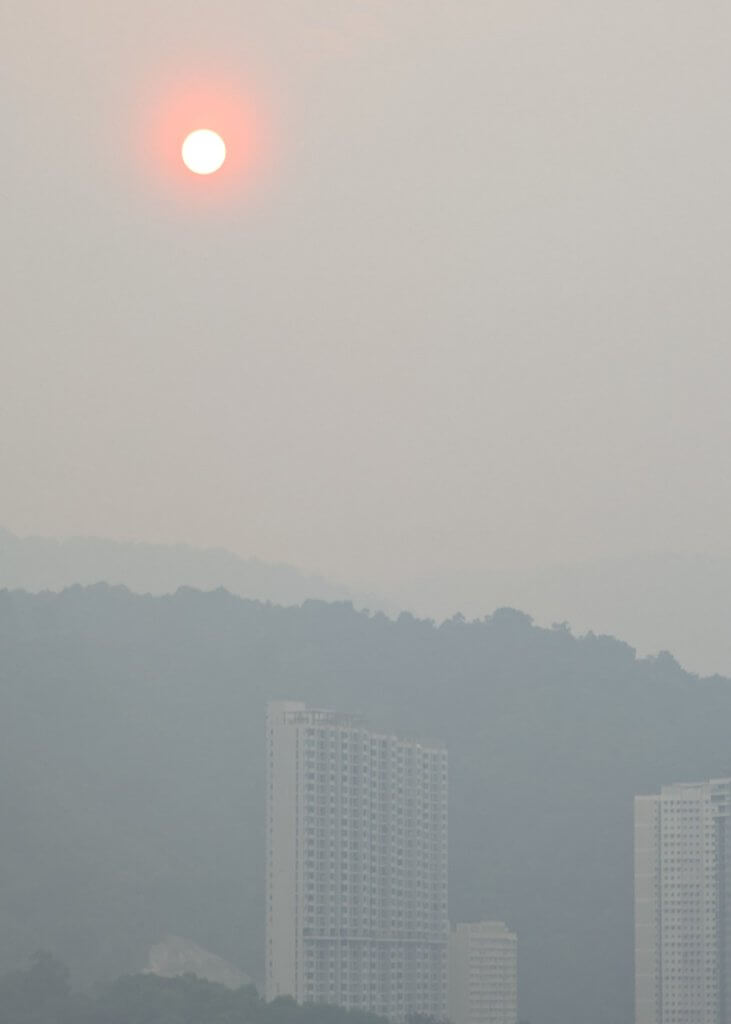
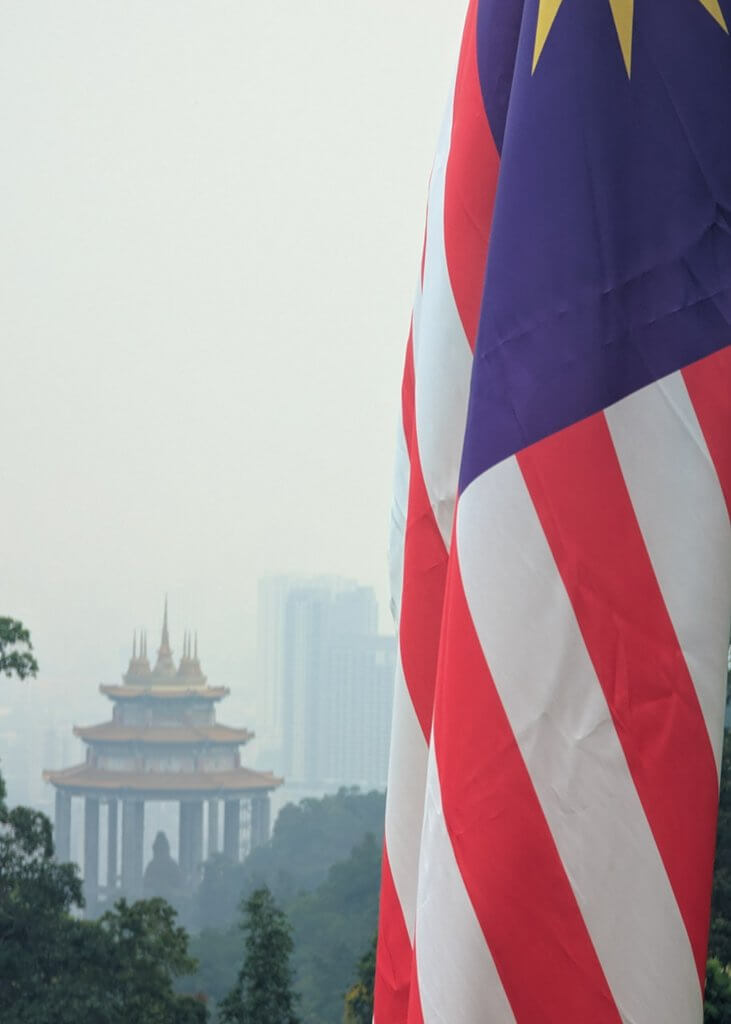
Haze can range from a slight reduction in visibility to air quality that makes strenuous outdoor activity unpleasant or inadvisable.
One of the easiest things to notice is the view. On a clear day in Penang, distant islands and the mainland can be visible across the sea. During haze, these views can disappear behind a milky or grey layer.
Visibility isn’t a reliable way of judging air quality, though. Haze can sometimes look relatively mild while fine particulate levels are still elevated, so it’s better to check an air quality reading before deciding whether to spend the day outdoors.
Haze in Penang in 2026
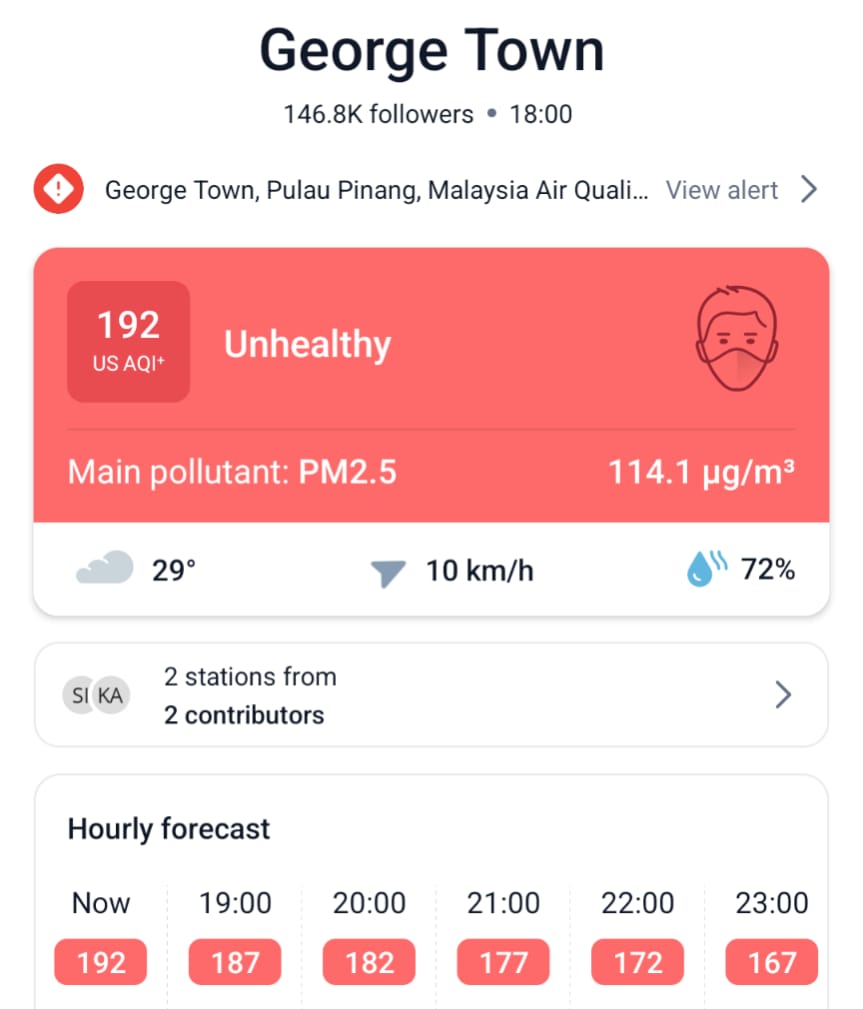
Penang has experienced a significant haze episode in August and September 2026, with air quality reaching unhealthy levels at times.
The IQAir AQI in Penang reached over 190 on Tuesday 15th September, putting it firmly into the Unhealthy category. Air quality has fluctuated considerably, however, with rain and changing weather conditions bringing periods of clearer air.
This is a particularly bad haze episode, but it shouldn’t be taken as an indication that Penang experiences severe haze every year.
How do you check the air quality in Penang?
There are two useful things to look at: the Malaysian Air Pollutant Index (API) and the AQI used by services such as IQAir.
Malaysia’s Department of Environment uses the Air Pollutant Index (API) to report air quality. The index takes several pollutants into account, with the highest pollutant sub-index determining the overall API value.
For a quick local snapshot, the IQAir Penang air quality page shows current readings from monitoring stations around the island, including PM2.5 levels. This is what most people use in Penang.
The two systems don’t use exactly the same scale, so don’t assume that an API number and an AQI number are directly interchangeable.
What is PM2.5?
PM2.5 refers to very small particles measuring 2.5 micrometres or less in diameter. These fine particles are particularly important when looking at haze because they can penetrate deep into the lungs.
If you’re deciding whether to go for a long hike, cycle or run, checking the PM2.5 reading is therefore more useful than simply looking outside and deciding whether the sky looks hazy.
Should you go outside when Penang has haze?
It depends on the air quality, your personal circumstances, and what you’re planning to do.
A short walk around George Town is very different from spending several hours hiking up Penang Hill or doing a strenuous cycle ride. As air pollution increases, strenuous outdoor activity becomes more of a concern because you’re breathing more air into your lungs.
Malaysia’s Department of Environment guidance recommends minimising strenuous outdoor activity when the API exceeds 100 and avoiding strenuous outdoor activity when it exceeds 200. If you’re checking IQAir, readings of 151–200 are classified as unhealthy, while 201-300 are considered very unhealthy.
For visitors, this means that a haze day may be a good time to swap a planned hike or long cycle ride for exploring George Town’s museums, galleries, cafés and other indoor attractions. Perhaps check out our guide to the best cafes in Penang.
People who are particularly sensitive to air pollution should take extra care. Fine particulate pollution can aggravate respiratory problems, and children, older people and people with existing health conditions can be more susceptible to its effects.
What to do in Penang when there is haze
You don’t necessarily need to abandon your day if the air quality is slightly elevated, but it makes sense to adapt your plans when readings become poor.
Some good options include:
- Explore George Town’s museums and heritage buildings
- Visit an indoor attraction
- Spend some time in cafés and restaurants
- Go shopping
- Choose a shorter, less strenuous outdoor activity if air quality allows
- Save longer hikes and cycling trips for a clearer day
If you’re staying in Penang for several days, this is one reason not to plan every day around outdoor activities. Haze can clear surprisingly quickly, so keeping some flexibility in your itinerary is useful.
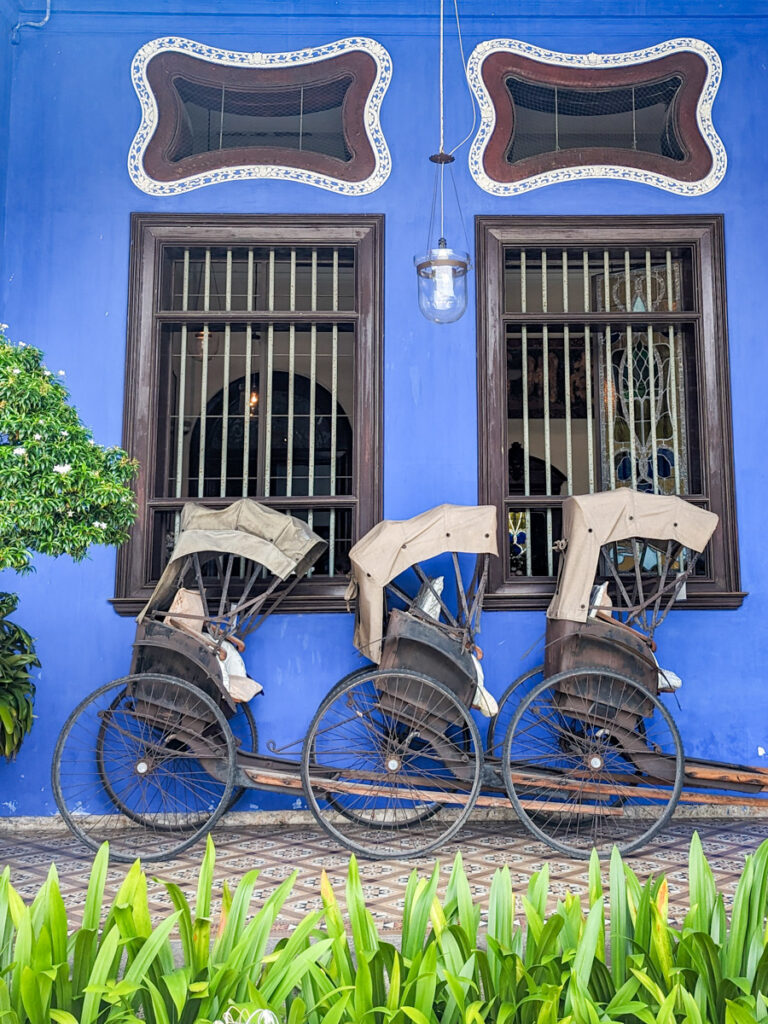
Wondering what to do on a rainy day in Penang or where to go to escape the heat? Here we have compiled the best indoor activities in Penang for you.
Does rain clear haze in Penang?
Yes, rain can make a significant difference to air quality because precipitation removes particles from the atmosphere.
This is one reason heavy rain can bring welcome relief during a haze episode. After a good downpour, the air can feel noticeably fresher and distant views can return. In August 2026, for example, a spell of rain brought Penang’s air quality back into the moderate range after several days of haze.
Rain doesn’t necessarily mean the haze is gone for good, though. If fires continue and dry conditions return, poor air quality can return too. But as the wetter weather becomes more established later in the year, more frequent rainfall generally makes persistent haze less likely.
Is Penang safe to visit during haze?
A haze episode doesn’t automatically mean you need to cancel a trip to Penang. The important thing is to look at the current air quality, rather than making a decision based on the time of year alone.
If you’re visiting during a period of poor air quality, you may need to adjust your plans, particularly if you had intended to spend a lot of time hiking, cycling, or generally outdoors.
For most visitors, the practical approach is simply to monitor the air quality during the trip and be prepared to swap outdoor activities for indoor ones when readings are poor. Conditions can change quickly, too. Rain and changing wind patterns can sometimes bring much clearer skies and considerably better air quality within a short period.
When is the best time to visit Penang to avoid haze?
There is no month that guarantees haze-free weather in Penang, but the risk is generally highest during August and September, when prolonged dry conditions can coincide with regional fires. Haze isn’t an annual certainty, though, and conditions vary considerably from year to year.
If you’re looking for the best chance of clear blue-sky days, January and February are a good bet. The wetter season has passed, rainfall is generally lower and temperatures are at their coolest – although it’s still hot, this is the tropics after all! Indeed, we believe that this is the best time to visit Penang.
On Penang ebook
Updated for 2026, the On Penang ebook is the only travel guide you need for exploring the island of Penang. It is jam-packed with inspiration on what to do, where to eat, where to stay, and also includes a step-by-step self-guided walking tour of George Town (with photos).
This is a PDF download for use offline and on the go (and ad-free!). Save it to read on the plane to Malaysia, download to your phone to follow the self-guided walking tour, or print it off at home before you leave on your adventures and highlight all the bits you want to remember for your visit.
-
 On Penang ebook£16.95
Before your go, check out these useful reads for your visit:
The best things to do in Penang
14 BEST restaurants in Penang
Top tips for visiting Penang
One day Penang itinerary
Best hotels in Penang
How to get around Penang
A brief history of Penang
